IXL Product Design
Introduction
About IXL Learning
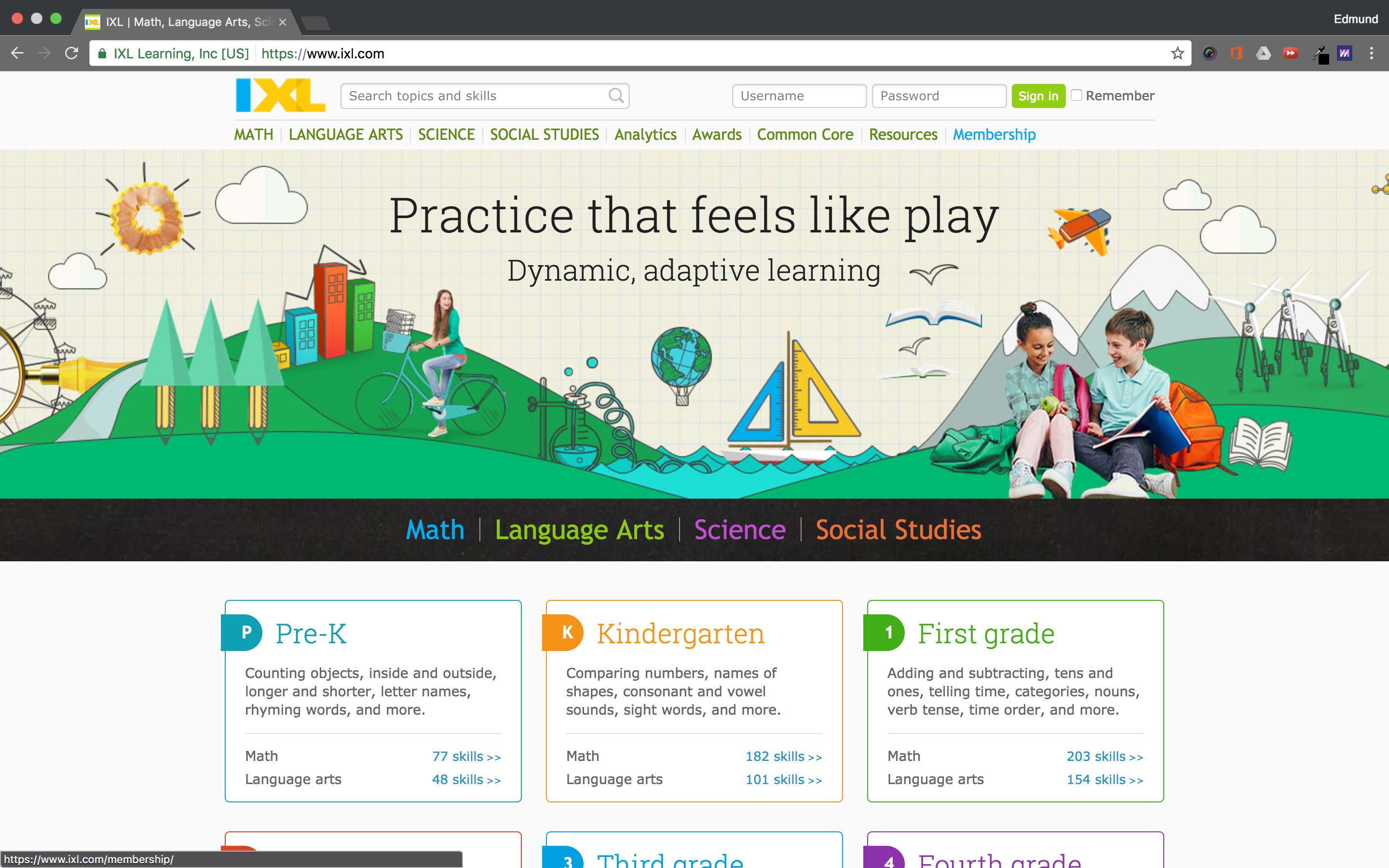
IXL is an immersive online learning platform that provides standards-aligned practices for Math, Language arts, Science and Social Studies, covering more than 6000 skills for K-12 students.Through highly interactive content and an adaptive learning system, students are not only engaged in practicing but also develop concepts and skills mastery that prepares them for school, standards assessment and eventually lifelong learning.
What did I do for the project?
- Conducted user research through in-depth interviews with K-12 teachers for product design.
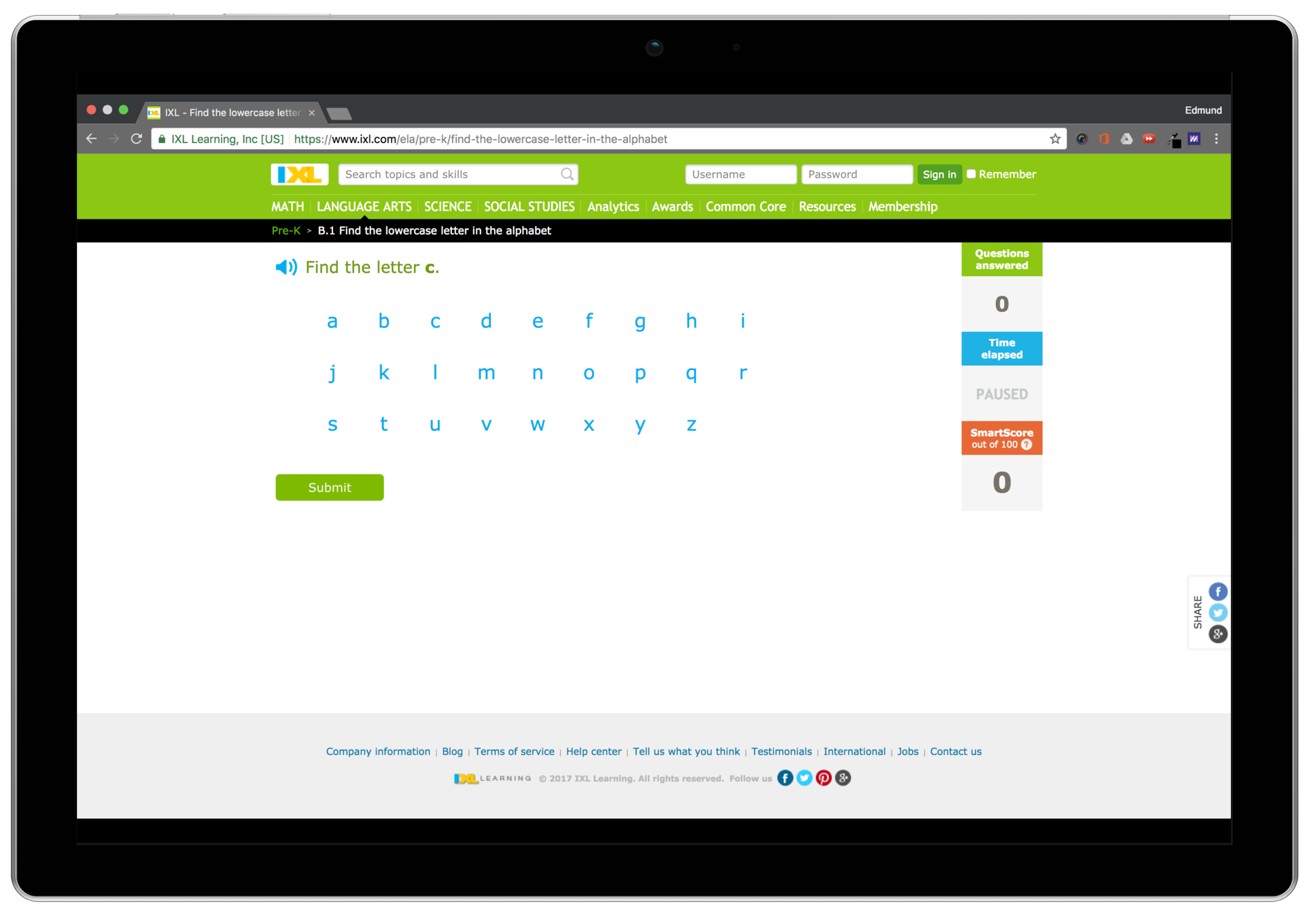
- Evaluated and made product enhancement recommendations to help improve user experience. I decided to focus on the student learning experience.
- Include behavioral design elements like social proof and healthy competition to enhance the user engagement
- Enhancing UI for learning progression while students practice their questions to improve motivation
- Proposed alternative scoring methods for Challenge Zone to current points-based UI to create a more satisfying experience
- Offline access to practices for students on mobile and tablet applications.
- Designed from scratch the homework assignment feature for students and teachers
Tools that I used for this project
- Sketch for UI wireframes and grayscale prototypes
- Lucidcharts for user flow
- Invision for interactive prototype
- Deployed Jekyll for online documentation of design process
My Research and Design Process
Creating empathy and finding inspiration
To formulate product recommendations that really meet user needs, I conducted in-depth one-on-one interviews with 4 teachers with K-12 and High School teaching experiences. Additional research also included studying user feedback to identify pain points and domain expertise research for potential product opportunities and innovation.
| Teacher F | Teacher Y | Teacher W | Teacher J | |
|---|---|---|---|---|
| Years of experience | 11 | 13 | 13 | 6 |
| Grades Taught | 4 to 6 | 6, 7 | 2 to 5 | High School |
Teacher F
- Coaches teachers on classroom management and English Language Speakers program
- Expertise in 1-1 literacy guidance
- Used IXL LA for 1 year after parent donated license to class.
Teacher Y
- In charge of 6th grade LA curriculum design
- Emphasis of 21st Century Learning Framework and Multi Engagement
- Sit on the Common Core alignment committee
- Hosted California Secretary of Education to demonstrate effective classroom use of technology like Apple TV, Google Docs, Expedition
Teacher W
- Have experience implementing Renaissance reading program softwareto help students improve reading habits and scores.
- Taught in low-income communities
- In charge of Language Arts and Social Studies lesson plan and pacing guide
- School did not have resources to provide technology
Aims of interviews
Through face-to-face interviews, I was able to hear first-hand recounting of narratives and was able to observe emotions of the interviewees. It helped me to develop a better understanding of what teachers really feel deeply about and how their day-to-day experiences have shaped their perspectives on how students are engaged in learning and the challenges they face in classrooms.
Some Key Learning Points
One of key learning points was recognizing the deeply social environment that IXL or any educational technology product (google expeditions, renaissance program etc.) is embedded in. There are social behavioral traits such as social proof, social recognition and competitiveness exhibited amongst the students where they enjoy challenges and competing with one another.
In addition, teachers also have a deep desire for autonomy in deciding the best means to help their students. This desire is rooted in the belief that their professional training and close relationships with the students cannot be replaced by any technology solution. This means that any technology solution needs to have a teacher-first focus.
Moreover, different teachers have different teaching styles and aptitude to implement technology solutions. Teaching tools like IXL should have features that are modularized and be flexible enough to fit into different teaching scenarios.
Even without quantitative data, it is even more so crucial that the design process relies on reliable qualitative data. At the initial phase of prioritizing product ideas to work on, we can use the data points to help prioritize product ideas to work on and crearte user stories and personas with the data collected during the research phase.
For conciseness, I have condensed six main insights that I have derived from my preliminary research phase in Appendix A.
Design Method
I used grayscale design for wire-framing and prototyping as I’m less concerned about the visual aesthetics but instead, am focused on the overall layout and product functionalities. Without needing to worry about pixel perfection, I am able to make strategic product decisions concerning UI and user flow.
Grayscale design also has the benefit of visual hierarchy by virtues of contrast over a basic wireframe that only uses lines. As I’m proficient in Sketch, I am able to mock-up the wireframe as quick if not quicker than drawing on pen and paper, with a consistency and tidy-ness that I’d personally prefer. It helps me to communicate my product ideas to engineers and other product managers without being too abstract or missing details in my design elements.
However, I strongly believe that the prototyping process and the kind of design style used should be up to the designers as long as it helps them to communicate product ideas effectively.
New Product Recommendations
Summary
I will be focusing on the product experience of the students, particularly, on enhancing the immersive learning experience while practicing. My recommendations are:
- Include social proof and healthy competition features to make practicing more fun and social.
- A new GUI to heighten sense of progression and motivation to continue practicing
- Consider using streak or token scoring for challenge zones.
- Allow students to download assignments for offline access on mobile and tablet.
Read more in this document: